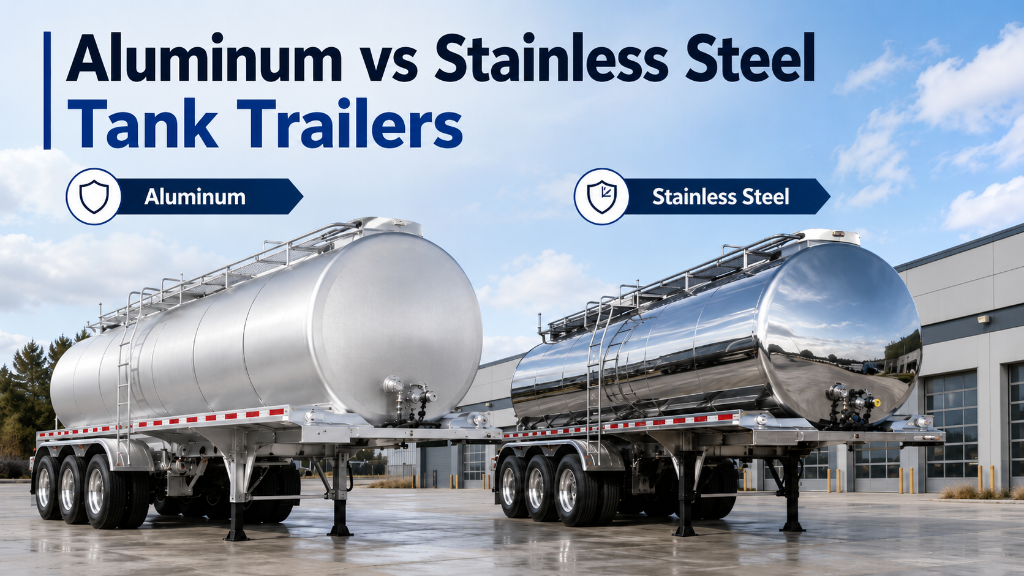
Aluminum vs. Stainless Steel Tank Trailers: What’s the Difference?
If you're shopping for a tank trailer, one of the decisions you'll eventually run into is aluminum or stainless steel?
At first glance, it might seem like a simple choice of material. In reality, the material a tank trailer is made from can affect its weight, durability, corrosion resistance, maintenance needs, cost, and most importantly, what you can safely and appropriately haul.
And just like choosing between new and used equipment, there isn't one material that's automatically better than the other.
The right choice depends on your product, your operation, and what you need from the trailer.
Here's what buyers should know before making that decision.
Why Does Tank Material Matter?
A tank trailer isn't a one-size-fits-all piece of equipment.
The product you're hauling should be one of the first things you consider when determining what type of trailer you need. Different products can have different requirements involving compatibility, sanitation, corrosion resistance, weight, temperature, and tank specifications.
That's why you shouldn't choose a trailer simply because it's available or because the price looks good.
Start with what you're hauling. Then work backward to determine the trailer you need.
Aluminum Tank Trailers
One of aluminum's biggest advantages is its lighter weight compared with stainless steel.
Reducing trailer weight can be valuable for operations where payload is a major consideration. Depending on the trailer's design and application, a lighter trailer may allow an operator to carry more product while staying within applicable weight limits.
Aluminum also offers natural corrosion resistance, which makes it useful for a variety of transportation applications.
Where Will You See Aluminum Tank Trailers?
Aluminum is commonly found in applications such as:
However, the fact that a trailer is aluminum does not automatically mean it's suitable for every product within those categories.
Product compatibility and the trailer's specifications always need to be verified.
Advantages of Aluminum
Lower Weight
This is often the biggest reason buyers consider aluminum. When payload matters, reducing the empty weight of the trailer can be a significant advantage.
Corrosion Resistance
Aluminum naturally resists rust, although it can still experience corrosion or deterioration depending on the environment and product being hauled.
Payload Potential
A lighter trailer can potentially provide additional payload capacity compared with a heavier trailer configuration, assuming all other legal and operational requirements are met.
Things to Consider With Aluminum
Aluminum isn't the answer for every application.
Certain products may require different materials or specifications, and aluminum can behave differently than stainless steel when subjected to particular chemicals, stresses, or operating conditions.
That's why product compatibility should always come before weight or price.
Stainless Steel Tank Trailers
Stainless steel is another material you'll frequently encounter when shopping for tank trailers.
It's known for its durability, corrosion resistance, and ability to handle demanding applications.
You'll commonly see stainless steel used for trailers designed to transport:
- Chemicals
- Acids and corrosive products, when compatible with the specific grade and trailer design
- Food-grade and sanitary products
- Milk and other dairy products
- Certain vacuum applications
- Other specialized liquid products
Again, stainless steel alone doesn't determine what a trailer can haul. Tank specifications, material grade, previous cargo, regulatory requirements, and the trailer's overall design all matter.
Advantages of Stainless Steel
Durability
Corrosion Resistance
Sanitary Applications
Versatility
Things to Consider With Stainless Steel
Stainless steel is generally heavier than aluminum, which can affect the trailer's empty weight and available payload.
It can also come with a higher initial purchase price depending on the trailer, specifications, and market.
For many applications, however, buyers choose stainless because the characteristics of the material are necessary or beneficial for the product they're transporting.
Is Stainless Steel Stronger Than Aluminum?
This question comes up frequently, but it shouldn't be the only factor in your buying decision.
Stainless steel generally offers greater strength than aluminum, while aluminum provides a significant weight advantage.
But tank trailers are engineered around the properties of the material being used. A properly designed aluminum trailer isn't simply a "weaker version" of a stainless trailer.
They're different materials used for different purposes.
Instead of asking:
"Which material is stronger?"
A better question is:
"Which material is appropriate for what I'm hauling and how I'm operating?"
That's the question that should drive your decision.
What About Maintenance?
Regardless of whether you choose aluminum or stainless steel, neither trailer is maintenance-free.
Both should be regularly inspected for things such as:
- Cracks or structural damage
- Corrosion
- Weld condition
- Tank damage
- Valves and fittings
- Suspension components
- Brakes
- Tires
- Hoses and connections
The type of product being hauled can also affect how closely certain areas of the trailer need to be monitored.
Good preventative maintenance matters far more than simply choosing one material over another.
What Should You Consider When Choosing?
If you're comparing an aluminum trailer with a stainless steel trailer, don't make your decision based on material alone.
Start by answering these questions.
1. What Are You Hauling?
This should always be near the top of the list.
Make sure the tank material and trailer specifications are compatible with your intended product.
2. How Important Is Payload?
If maximizing payload is a major priority, trailer weight deserves careful consideration. Aluminum's lighter weight may be advantageous for certain operations.
3. Are There Sanitary Requirements?
Food-grade and dairy applications can have specific requirements for tank construction, cleaning, and sanitation. Make sure the trailer you're considering meets the requirements of your operation and cargo.
4. How Will the Trailer Be Used?
Think beyond today's load.
Consider your routes, loading and unloading process, frequency of use, expected mileage, environment, and whether your hauling needs could change in the future.
5. What Are the Trailer's Actual Specifications?
Two stainless steel trailers aren't necessarily interchangeable.
Neither are two aluminum trailers.
Capacity, material grade, tank design, code, axle configuration, valves, pumps, fittings, and other equipment can make two seemingly similar trailers very different.
Don't Buy Based on Material Alone
One of the biggest mistakes a buyer can make is starting with:
"I need a stainless trailer."
or
"I want aluminum because it's lighter."
Instead, start with:
"Here's what I'm hauling. What trailer do I actually need?"
That one change in thinking can help prevent an expensive purchasing mistake.
A trailer that's a great deal but isn't appropriate for your product isn't a great deal at all.
Aluminum vs. Stainless: Which One Is Right for You?
Neither material wins across the board.
Aluminum may make more sense if weight and payload are major considerations and the material is appropriate for your product and application.
Stainless steel may make more sense if your operation requires its corrosion resistance, durability, sanitary characteristics, or compatibility with the product you're hauling.
Ultimately, the best tank trailer isn't determined by whether it's aluminum or stainless steel.
It's determined by whether the entire trailer is properly suited to your operation.
Know What You're Hauling Before You Start Shopping
Buying a tank trailer is a major investment, and asking the right questions beforehand can save you from purchasing equipment that doesn't fit your needs.
Before deciding between aluminum and stainless steel, know your product, understand your application, and make sure you're comparing trailers based on more than price and appearance.
At United Tank Trailer, we work with customers across a wide range of tank trailer applications. If you're considering a new or used trailer and aren't sure which material, configuration, or specification you need, talk with our team about what you're hauling and how you plan to use the trailer.
Sometimes the most valuable part of buying a trailer is knowing exactly what questions to ask before you buy it.

